viaim RecDot Review: The Best Plaud Note Alternative for Meeting Transcription in 2026
This post contains affiliate links, meaning if you click through and make a purchase, I may earn a small commission at no extra cost to you. I only recommend products I personally use and believe bring value to my audience.
The viaim RecDot AI note-taking earbuds are the strongest Plaud Note alternative in 2026. They record phone calls from both sides, transcribe in 78 languages, include 600 free transcription minutes per month, and do all of it through a pair of earbuds you'd already be wearing. The Plaud Note is a well-made AI voice recorder. RecDot does more, costs $40 more, and solves the problem most Plaud users eventually run into: leaving the device at home.
I own both. Here's the full comparison.
Why People Are Looking for a Plaud AI Alternative in 2026
What is a PDF Space?
The Plaud Note hit a nerve when it launched. A credit card-sized AI recorder that clips to the back of your phone with MagSafe, transcribes your meetings, and generates summaries? That's a useful product and a lot of professionals bought one (including me).
But a few pain points keep coming up in the Plaud community. The Plaud device is only useful if it's with you. It's a dedicated wearable recorder, which means it's one more thing to remember, charge, and carry. Recording calls is limited depending on how you use it. And the free plan offers 300 free transcription minutes per month, which goes faster than you'd expect.
That's what's driving people to look for a Plaud AI alternative in 2026. Not because the original Plaud Note is bad, but because the use case has real edges and other products are starting to close the gap.
The RecDot is the most interesting one I've tested!
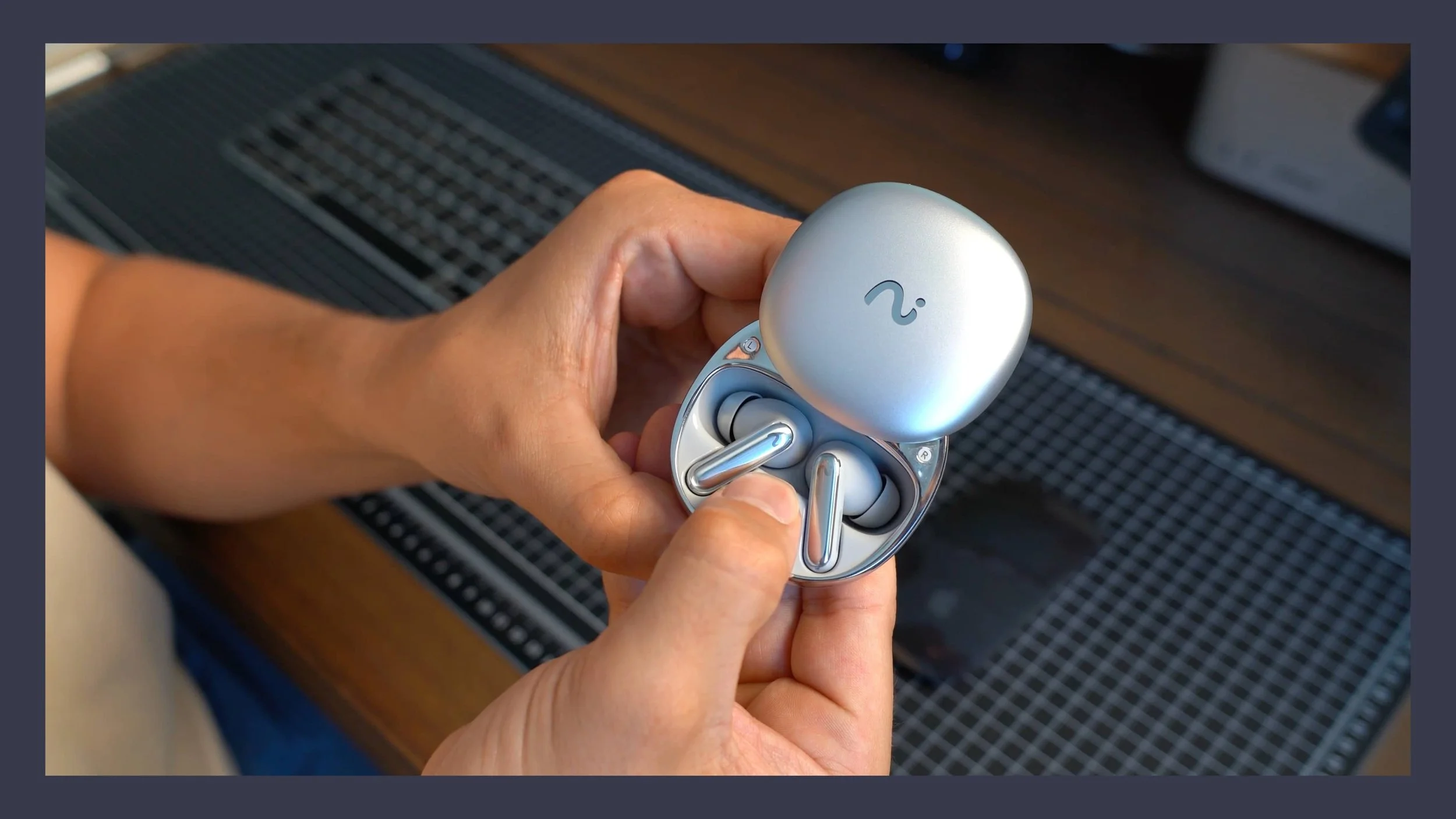
The viaim RecDot earbuds record from the earbuds, the case, or both sides of a phone call automatically.
What Is the viaim RecDot AI Note Taker?
The viaim RecDot is a pair of AI note-taking earbuds priced at $199.99. They look like a regular pair of wireless earbuds, because they are. But underneath the familiar form factor is a full AI note taker built into something you'd already be wearing. They weigh 4.8 grams per earbud, offer 9 hours of battery per charge and 36 hours with the case, and carry IP55 water resistance.
The product is made by viaim, a Hong Kong-based company. RecDot is certified under ISO 27001, ISO 27701, SOC 2 Type II, HIPAA, and EN 18031, which matters if you're recording client calls or anything sensitive. The viaim app is powered by ChatGPT, Gemini, and Claude, so the AI models running your transcription and summaries are the same ones powering the best AI tools in the world.
Instead of a card-style device clipped to your phone, RecDot integrates recording into something you wear. That distinction shapes everything about how the two products compare.
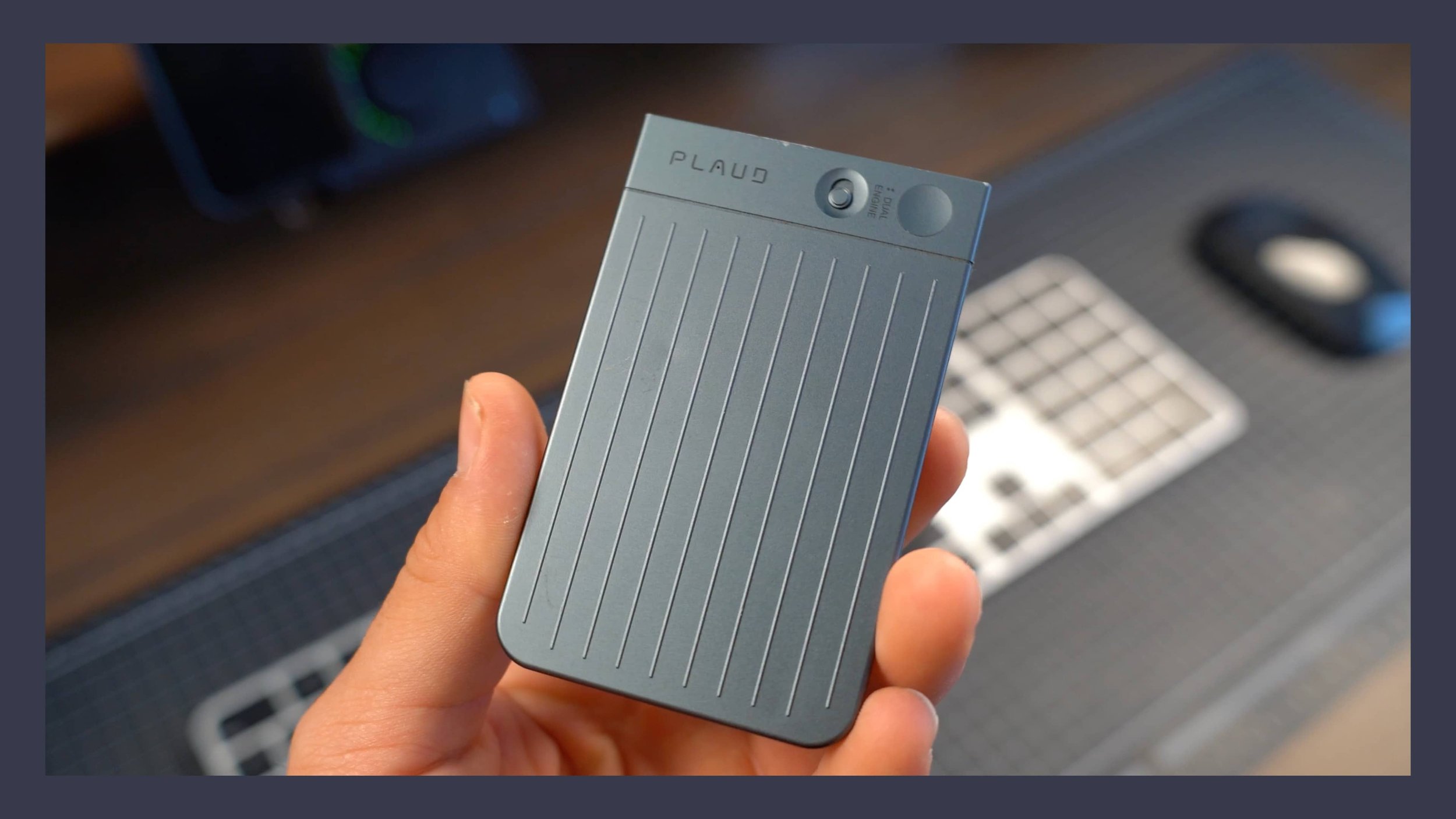
The Plaud Note is a great dedicated AI recorder. The problem: it's only useful when you remember to bring it.
RecDot vs Plaud: How the Recording Works
This is where RecDot makes its clearest case as a Plaud note alternative, and where the two products differ most in practice.
The Plaud device records ambient audio. Quality depends on placement and room volume. On a phone call, the other person's voice depends on your speaker volume. In a quiet room that works fine for capturing audio. On a busy street or with a quiet caller, it becomes a problem.
RecDot handles recording in three distinct ways, and that flexibility is the point.
Long-press either earbud while it's in your ear and recording starts instantly. No app, no phone, no extra steps. You're already wearing them. That's all it takes.
The case recording is the feature that surprised me most. Open the case, press the red button inside, and it records directly into the case. You can set it on a conference table, walk to the whiteboard, grab a coffee, and it captures everything. That's not something most earbuds or most dedicated recorders can do.
For phone calls and Zoom meetings, RecDot captures both sides of the conversation automatically through the viaim app. Not just your voice. Both sides. That's a direct advantage over the Plaud when it comes to recording calls in any context.
Everything syncs to the viaim app the moment you open the case. No audio file transfers, no cables. It's just there.
Free Transcription Minutes Per Month: RecDot vs Plaud Note Alternative
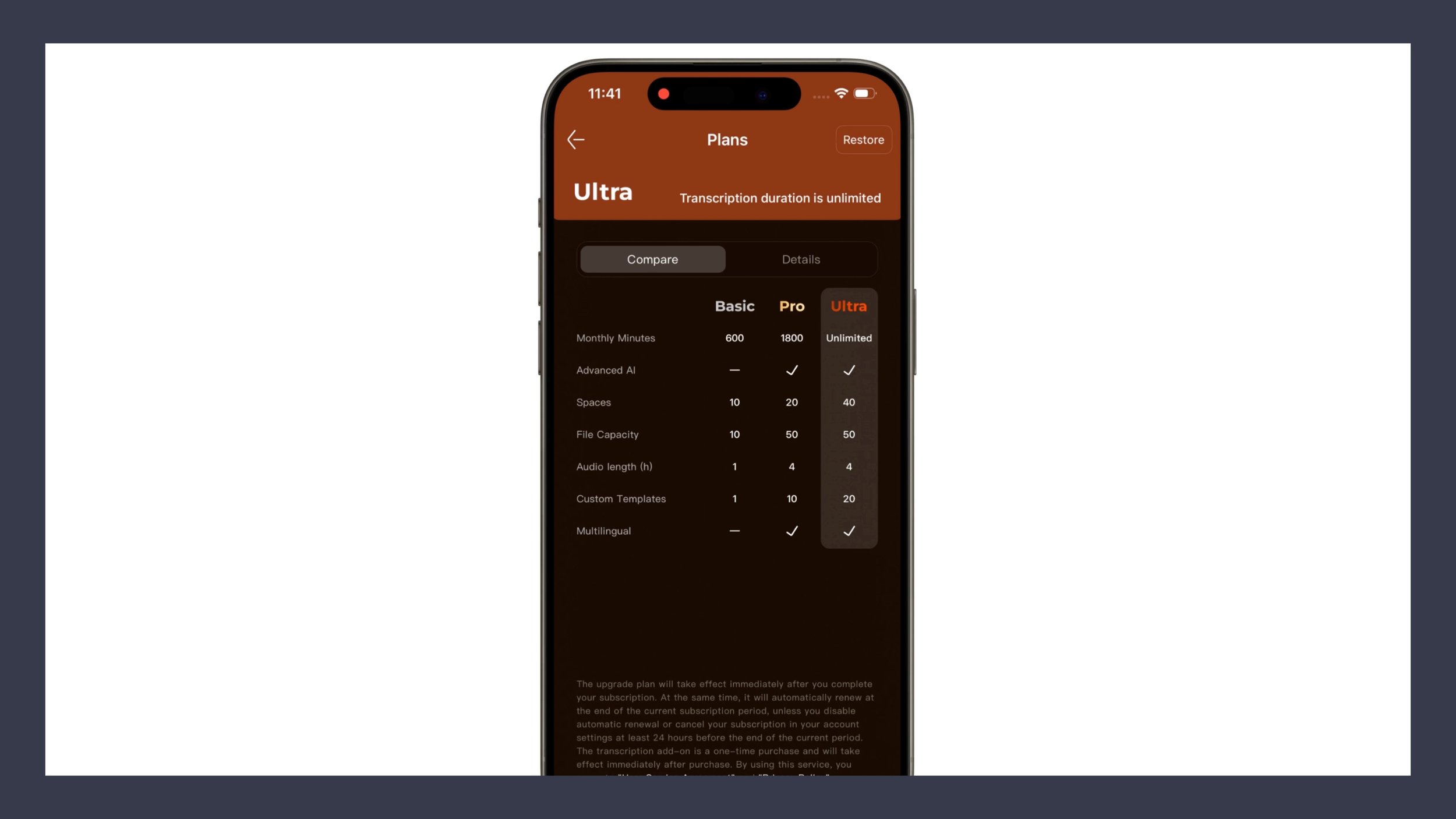
RecDot includes 600 free transcription minutes per month. Most occasional users will never need to upgrade.
Any AI voice recorder is only as good as what it does with the audio after the fact. This is where the numbers between RecDot and the Plaud Note get specific.
RecDot includes 600 free transcription minutes per month and offers an unlimited plan for heavy users. That's roughly 10 hours of in-person meetings before you'd need to think about upgrading. The Plaud free plan offers 300 free minutes, half that amount. For anyone recording daily standups, client calls, and longer strategy sessions across a working week, that difference adds up fast.
On paid plans, both products move to an unlimited transcription model at different price points. If you're a high-volume recorder who wants to avoid tracking minutes, checking the current subscription model for each is worth doing before committing. The generous free tier on RecDot means most occasional users will never need a paid plan at all.
Open the viaim app and every recording is already transcribed and organized. The transcripts are multi-speaker aware, meaning the app identifies who said what. On a client call or a team meeting, that's the difference between a useful transcript and a wall of text you have to decode yourself.
Summaries and action items are generated automatically from the same recording. Key points, a full mind map, and next steps, ready to share the moment you need them. You're not summarizing your own meeting. RecDot does it.
There are also 24 professional templates built in. Meeting notes, interview formats, lecture recaps. The structure is already there so you're not starting from scratch. The Plaud app delivers solid transcription and summary output but fewer options for shaping the format around your specific use case.
Real-Time Translation: A Feature the Original Plaud Note Doesn't Have
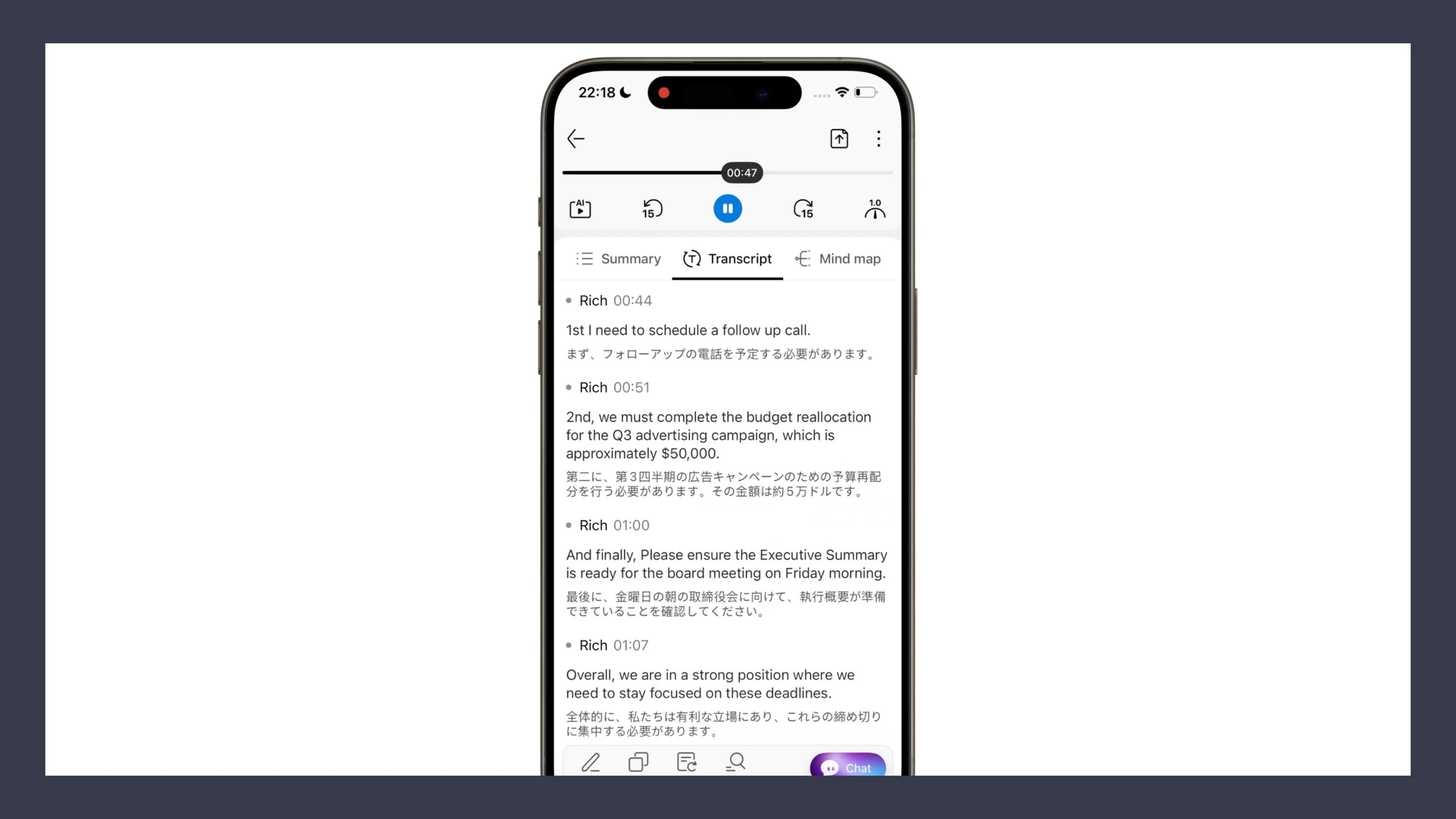
Real-time translation across 78 languages, with the audio playing directly in your ears as someone speaks.
RecDot includes real-time translation across 78 languages, with the translated audio playing back directly in your ears during the conversation. For anyone in international in-person meetings or working across language barriers, that's a feature the original Plaud Note and most other AI voice recorders simply don't offer.
The Plaud Note supports transcription in multiple languages after the fact, but not live translation with audio playback during the conversation. With RecDot, if someone is speaking French in a meeting, you hear the English translation in your ears as they speak. That's a different category of feature and a meaningful one for global professionals.
It also makes RecDot a stronger AI note taker for travel, international client work, and any context where language is a variable rather than a constant.
Vitana: The Advanced AI Features Other Reviews Miss
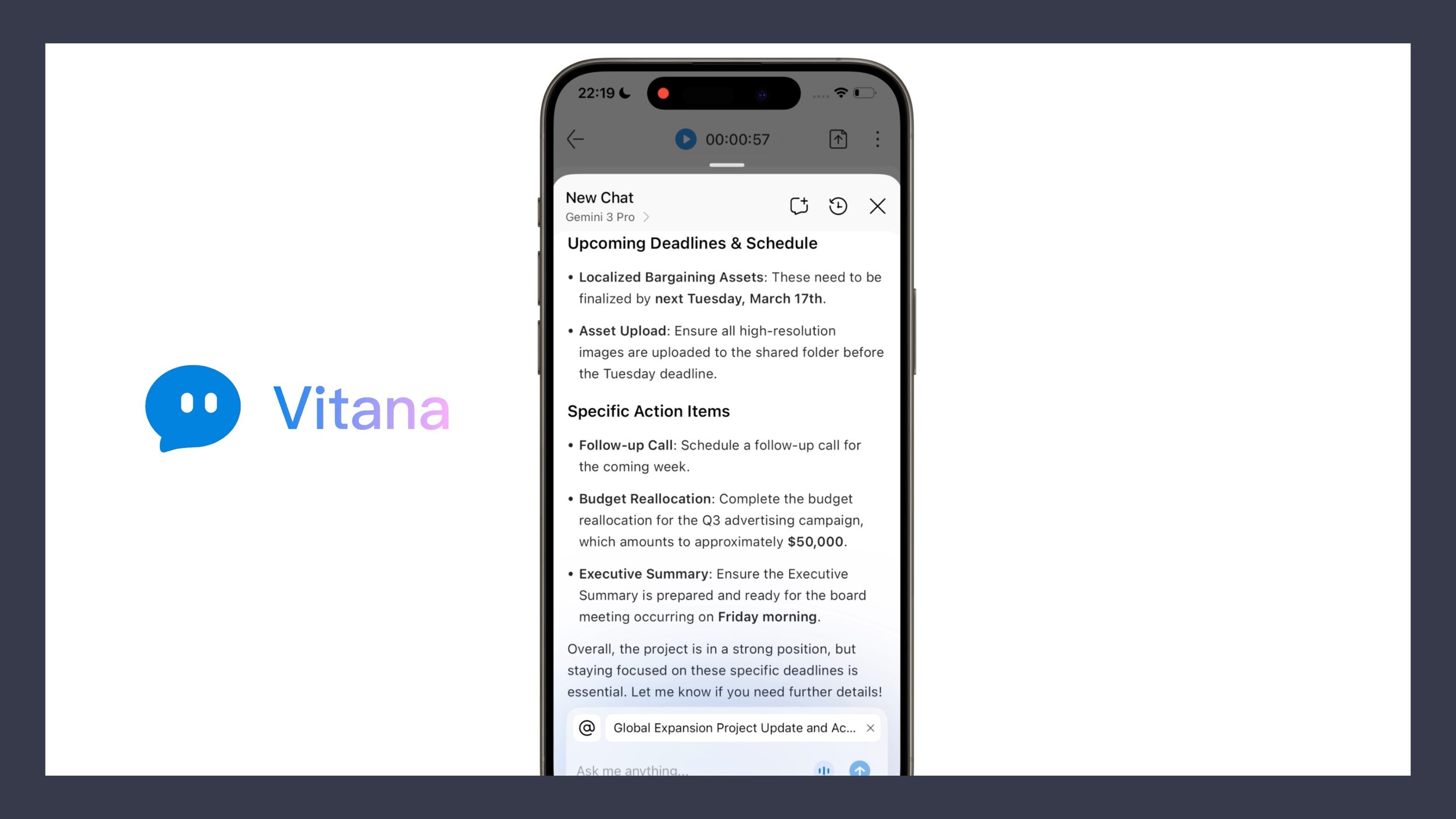
Vitana answers questions about your own recordings, not the internet. Ask it anything across your meetings, notes, and documents.
Every RecDot review I watched before writing this missed Vitana entirely. That's a significant omission because it's one of the most useful parts of the product and the clearest area where RecDot pulls ahead as a Plaud AI alternative.
Vitana is the AI assistant built into the viaim app. It functions as a meeting assistant and AI agent across all your recordings, not just the most recent one. What makes it different from other AI tools is what it pulls from. Not the internet. Your own recordings, notes, and documents.
You can upload your own files too, not just things captured with RecDot. Old meeting audio files, PDFs, notes from other apps. Vitana processes everything using the same AI transcription and AI processing engine and pulls it into one place. Organize content into Spaces, which work like project folders, and Vitana uses that context to give more accurate answers.
Ask it anything. "What did my client say about the budget?" "What were my action items from Tuesday's call?" It searches across your recordings and notes and gives you answers based on your own knowledge, not generic search results.
Most AI software knows a lot about the world. Vitana knows a lot about you. For anyone who references past meetings regularly or needs to connect the dots across conversations over time, that's a meaningful advantage. The Plaud app has no equivalent feature at this level.
Summaries and Action Items: How Both AI Voice Recorders Compare
Both apps generate a transcript and summary automatically. The core functionality is comparable. You finish a recording, open the app, and a structured output is waiting.
Where the viaim app pulls ahead is in customization. The 24 built-in templates let you shape the output around your specific use case. A product meeting summary looks different from a client interview, which looks different from a lecture recap. RecDot accounts for that through AI transcription templates. The Plaud app offers solid summaries and action items but fewer structural options for tailoring output format to context.
On export, both apps let you copy, share, and send transcripts and summaries. RecDot's export ties into the Spaces system, so if you're pulling notes from a specific project or client, everything is already organized before you export. That makes it a stronger tool for anyone managing multiple clients or workstreams at once.
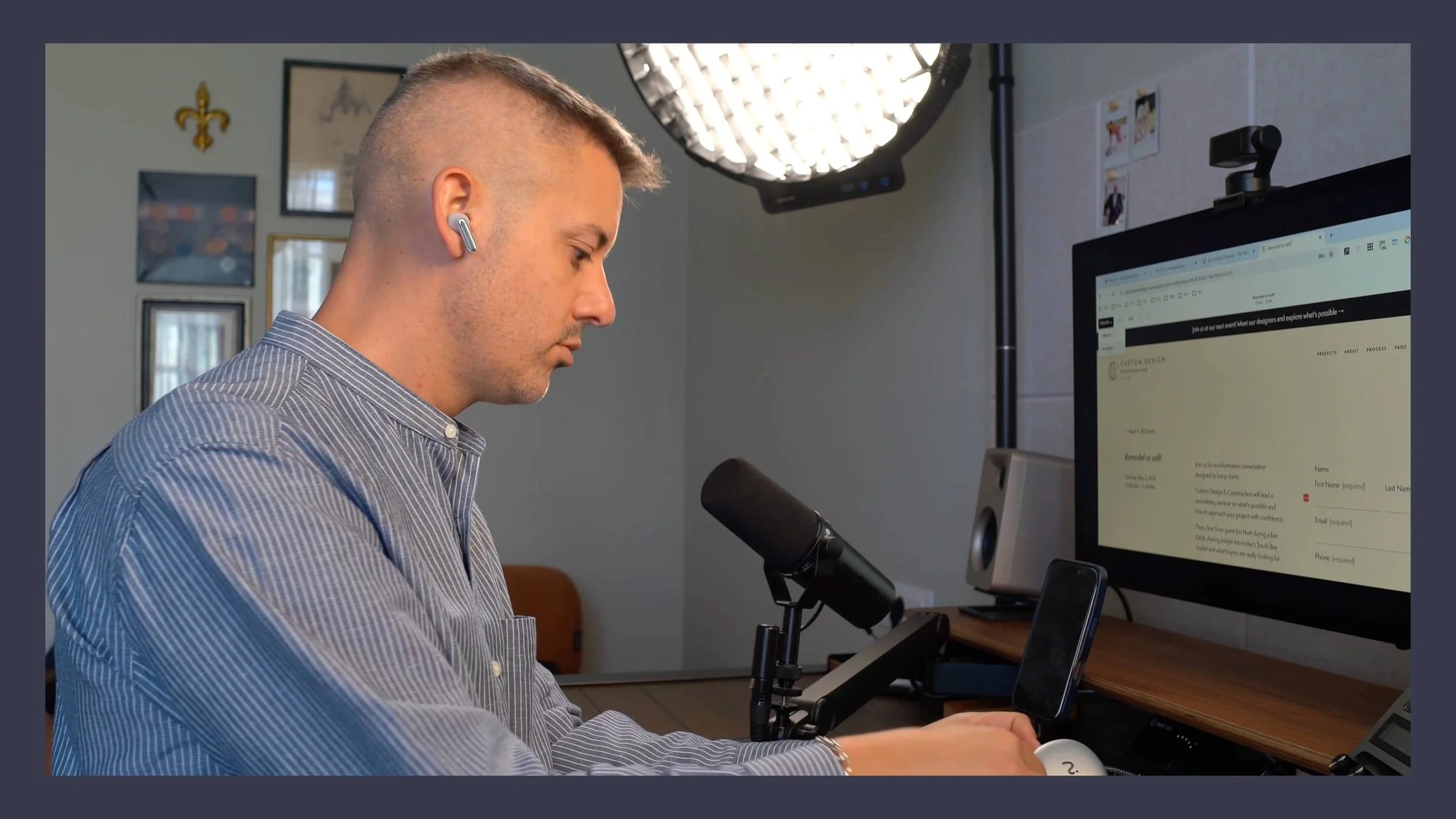
I wore these all day during back-to-back calls. At 4.8 grams per earbud, you stop noticing them quickly.
Plaud vs RecDot: The Honest Side-by-Side
I own both products and use them for real work. Here's where each one actually wins.
Where Plaud Note still wins
Battery life is the clearest advantage. The Plaud is a dedicated wearable recorder with standby measured in weeks. RecDot shares battery between audio playback and recording, giving you 9 hours per charge and 36 hours with the case. Fine for most days, but if you're in back-to-back in-person meetings and forget to charge overnight, you'll feel it with RecDot before you feel it with Plaud.
Plaud also wins on discretion in certain settings. A slim card clipped to the back of your phone is less visible than earbuds in some professional contexts, though most people don't think twice about earbuds anymore.
Where RecDot wins
The most honest reason to recommend RecDot over Plaud for most people: you're already wearing it. The Plaud device is only useful when it's with you. I left mine on my desk more times than I'd like to admit. RecDot is in your ears. The problem solves itself.
Two-way call recording is meaningfully better on RecDot. Both sides of the conversation, captured natively through the earbuds in real time. Plaud captures ambient audio and depends on speaker volume. Fine in a quiet room, unreliable on a busy street or with a soft-spoken caller.
Vitana gives RecDot a long-term edge for anyone who wants to query notes across time. If you just want clean transcripts from meetings, either one delivers.
On price: Plaud Note is around $160. RecDot is $199. The $40 difference includes a good pair of earbuds on top of the AI recorder. For most people starting fresh, that math is straightforward.
Is RecDot Worth Wearing Every Day? Audio Quality and Use Case
None of the above matters if the earbuds aren't worth putting in every day.
Audio quality holds up well. Clear mids and highs, decent bass, on par with solid mid-range earbuds. If you're coming from AirPods Pro or Sony XM5s, you'll notice a difference. If you're coming from a standard pair of wireless earbuds, you probably won't.
Call quality is better than expected. Your voice comes through naturally on the other end with no hollow or muffled sound, which matters when clients form an impression based on how you sound on a call.
ANC is rated at 48dB and works well in moderate environments like an office, a café, or a hotel lobby. It's not AirPods Pro level, and I'd rather say that plainly than have you find out on a loud train. If heavy noise cancellation is your top priority, factor that in before buying.
At 4.8 grams per earbud, they're light enough to wear for hours without noticing. IP55 water resistant means sweat and rain are not a concern. These are earbuds you can realistically wear all day, which is the whole point of this use case.
7 Best Plaud Alternatives in 2026
RecDot is my top recommendation, but here's a look at the other Plaud alternatives worth knowing if you're still comparing options.
Hidock: A Dedicated AI Recorder Worth Knowing
Hidock is a dedicated AI recorder aimed at professionals who want a purpose-built device rather than a wearable. It's less proven than the original Plaud Note at this point but gaining traction as an alternative without the MagSafe form factor. Worth watching as the product matures and the Hidock ecosystem develops further.
Ticnote: Wearable AI Recording Without the Subscription
Ticnote takes a different approach to wearable AI recording. It's gaining attention in the Plaud community as a lightweight option for people who want recording capabilities without committing to a paid plan. Still early but the value proposition is clear for lower-volume users.
Umevo: Best for Unlimited Transcription
Umevo is the strongest pick for high-volume recorders who want unlimited transcription without tracking minutes per month. If you record multiple hours of meetings every day and the subscription model matters more than hardware quality, Umevo is worth a closer look.
Plaud Note Pro and NotePin: Staying in the Plaud Ecosystem
If you like the Plaud app and want to stay in the ecosystem, the Plaud Note Pro and Plaud NotePin are worth considering. The Note and Note Pro share the same core AI transcription engine with added capability. The NotePin is Plaud's wearable option, a clip-on recorder that moves closer to RecDot's positioning but without the earbuds or two-way call recording.
Otter: Best Plaud Alternative for Online Meetings and Zoom
Otter.ai is app-based with no hardware required. If you mainly record Zoom or Google Meet calls and don't need a wearable recorder or ambient recording capability, Otter is a capable and affordable option. The free plan offers 300 transcription minutes per month. It works well as a meeting assistant for remote-first workers who don't need to capture in-person conversations but still want effective AI summaries.
Best Plaud AI Alternative in 2026: Final Take
The Plaud Note is a well-made product. If you already own one and it fits your workflow, there's no urgent reason to replace it.
But if you're looking for a Plaud AI alternative in 2026 and you're starting fresh, or you keep leaving your recorder on your desk, or you need reliable two-way call recording, or you want an AI note taker that works across all your notes over time, RecDot is the stronger buy.
One device that handles recording, AI transcription, real-time translation, and AI search, built into something you'd be wearing anyway. Similar to the Plaud in core purpose, but broader in what it can do and where it can go with you.